Mental Health Exercises for Adults: Daily Coping Strategies

Mental health exercises like mindfulness-based practices, behavioral changes, emotional regulation, social connections, and expressive exercises can reduce anxiety, but in some cases, professional help may be necessary. This article reviews what you can do to reduce stress and explains how BNI Clinics provides extra support.
Key Takeaways
- Various mental health exercises, such as meditation, deep breathing, behavioral activation, sleep hygiene, socialization, and expressive therapies, can improve emotional health.
- You can build a routine by working these exercises into daily life, starting small, and tracking your mood and progress.
- In some situations, exercise isn’t enough, and you may need additional help. This is common and isn’t a sign that anything is wrong with you. It just means you need help getting through a difficult time, like anyone else.
Table of Contents
- What Evidence-Based Daily Mental Exercises Improve Well-Being?
- How Can I Build a Sustainable Routine?
- How Do I Know When to Seek Professional Help?
- How Do I Get Started?
- BNI Clinics Is Here For You When You’re Ready
- FAQs
Introduction
Recently, we’ve come to understand that mental health is just as important as physical health- and daily practices matter. These could include deep breathing, meditation, journaling, getting enough sleep, and checking in with friends and family.
For some, these exercises may not be enough, and professional help may be necessary. This article walks you through what you can do to enjoy optimal well-being and explains when you may need to take mental exercise to the next level.
What Evidence-Based Daily Mental Exercises Improve Well-Being?
Exercises to manage stress include mindfulness practices, behavioral changes, emotional regulation, social connections, and expressive techniques.
Cognitive/Mindfulness-Based Practices
- Mindfulness Meditation: Trains attention to focus on the present moment, reducing worrying thoughts about the past and future. A later head-to-head trial published in JAMA Psychiatry found mindfulness meditation worked about as well as a standard anxiety medication (escitalopram), with anxiety severity dropping roughly 30% in both groups after two months.
- Cognitive Reframing: Identifies automatic negative thought patterns to guide healthier behavior.
- Gratitude Journaling: Writing down specific things that you are grateful for shifts attention away from negativity and is associated with more positive mood, greater optimism about the future, and better sleep, according to University of Washington research.
Behavioral Practices
- Behavioral Activation involves scheduling activities that bring pleasure or a sense of accomplishment to reduce feelings of depression and increase motivation. A Cochrane systematic review found moderate-certainty evidence that behavioral activation had greater short-term efficacy than usual care for depression in adults.
- Physical Exercise: Regular exercise reduces stress, boosts endorphins, and improves sleep. A large data analysis found that adults doing the equivalent of 1.25 hours of brisk walking per week had an 18% lower risk of depression than inactive adults, rising to 25% lower risk at 2.5 hours per week, with most of the benefit gained just by moving from no activity to some.
- Sleep hygiene, including practices like maintaining a regular sleep-wake schedule, doing calming activities before bed, and sleeping in a soothing environment, improves emotional health. A peer-reviewed cross-sectional study of 384 adults found depression rates were significantly higher among those with poor sleep hygiene practices (75.8%) than those with good practices (59.6%).
Emotional Regulation Techniques
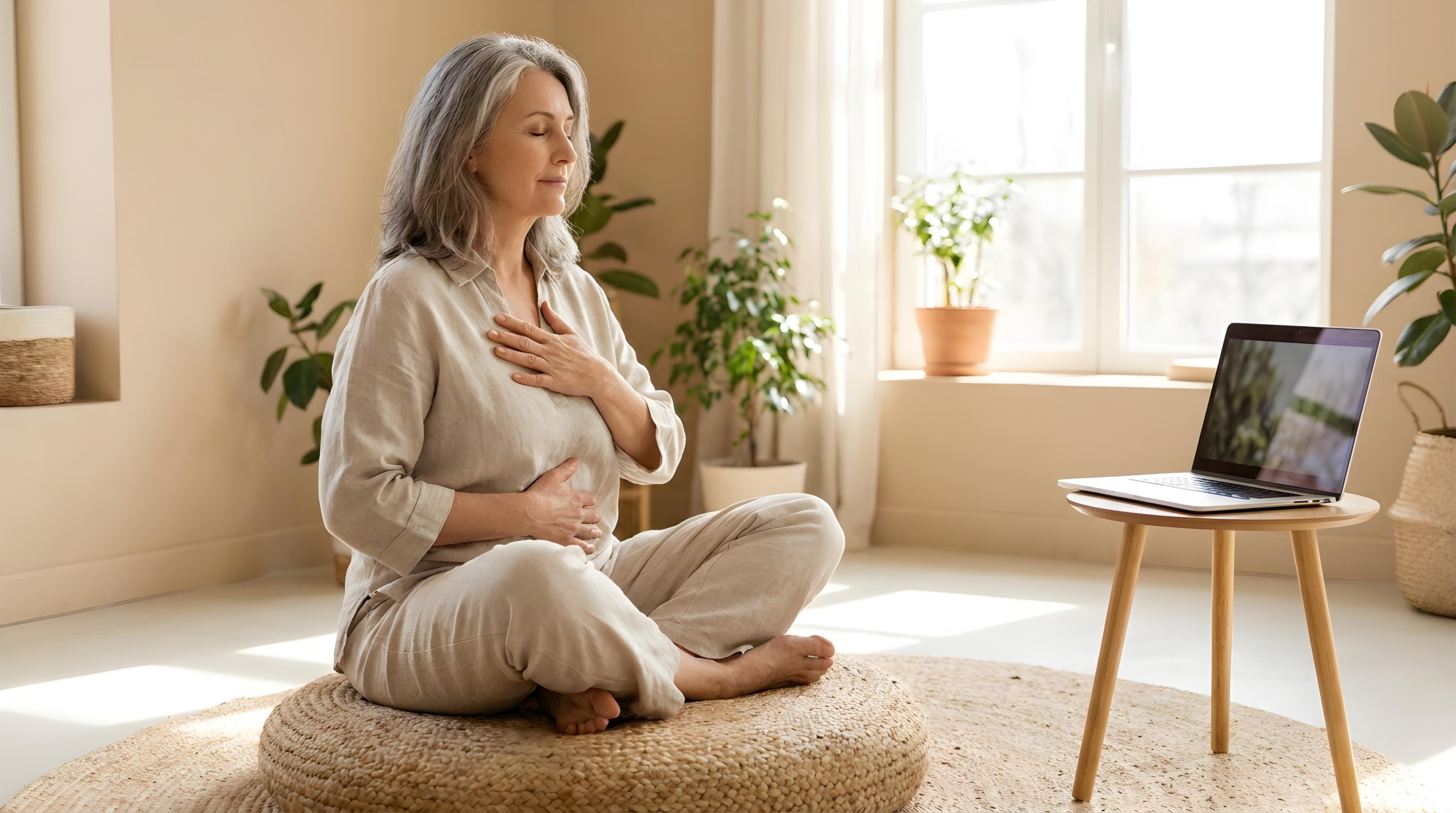
- Breathing exercises activate the parasympathetic nervous system, which controls the fight-or-flight response. A randomized controlled study measuring salivary cortisol and heart rate found deep breathing produced measurable reductions in both stress hormone levels and self-reported mood/stress compared to controls.
- Grounding Techniques (e.g., 5-4-3-2-1 sensory method): Grounding uses your five senses (naming things you can see, hear, smell, touch, and taste) to redirect your focus away from anxiety-provoking thoughts. It’s commonly used in anxiety disorders and trauma-informed care.
- Progressive Muscle Relaxation: PMR involves systematically tensing, then relaxing, muscles to recognize the physical tension that accompanies anxiety and reduce the subjective experience.
Social Connections
The U.S. Surgeon General’s 2023 advisory found that lacking social connection is associated with increased risk of anxiety and depression, and that roughly half of U.S. adults report experiencing measurable loneliness. Checking in with friends and loved ones can reduce these mental health issues and improve psychological health.
While social connections matter, it’s also wise to set boundaries to protect your time and energy and prevent resentment and burnout. Setting and respecting limits with others provides similar benefits to other emotional regulation exercises and reduces the frequency of stressful situations.
Expressive Practices
These include journaling that goes beyond a gratitude journal. For example, expressive writing, which involves writing about an emotional experience for 15-20 minutes. The concept was pioneered by psychologist James Pennebaker, whose studies found that college students who wrote about traumatic experiences went to student health services for mental illness at about half the rate of a control group and showed improved immune function.
Other helpful expressive practices include art, music, and writing.
How Can I Build a Sustainable Routine?
You can build a sustainable routine for mental health exercises by starting small, combining exercises into daily life, and tracking your mood and progress.
- Start Small: Overwhelming yourself with a life overhaul can worsen, not improve, mental health. Reduce stress by starting small, with about 5-10 minutes of exercise each day.
- Work It Into Your Daily Routine: Try to make mental health exercises part of what you already do. For example, you can do progressive muscle relaxation and deep breathing exercises almost anywhere, at any time. You might also try parking farther from your destination or taking the stairs instead of the elevator to ramp up your physical activity.
- Track Your Mood & Progress: Keep a journal of your mental health journey, recording daily improvements and how they affect your mood to see what’s working and stay motivated.
How Do I Know When to Seek Professional Help?
You may need professional help if your symptoms are persistent despite self-care, if they are interfering with daily life, if they are causing you to turn to substance use, or if you are experiencing suicidal thoughts or self-harm. These circumstances could indicate a diagnosable mental health condition that requires more attention.
- Symptoms are Persistent: Persistent symptoms, lasting more than a couple of weeks regardless of circumstances, can signal it’s time to talk to a professional. For example, major depressive disorder may be diagnosed when symptoms persist two weeks or more.
- Interference with Daily Life: Your symptoms frequently overwhelm you and interfere with work, school, and activities you once enjoyed.
- Substance Use: You are using substances to manage stress and anxiety.
- Self-Harm or Suicidal Thoughts: These indicate a need for emergency treatment.
How Do I Get Started?
If you or a loved one needs additional care, the first step involves finding the right treatment center. Ensure the center is licensed and accredited and provides personalized services that match your mental health needs. They will provide an evaluation of your overall health and match you with the appropriate level of care. Therapy is often a core component, and medications may be necessary under psychiatric care.
Taking the first step can be difficult, but it’s important to understand that getting help doesn’t mean there’s something wrong with you. It means something is hard right now, and hard things sometimes need more than willpower and a good routine.
BNI Clinics Is Here For You When You’re Ready
BNI Clinics of Los Angeles is a trusted provider of mental health services. We offer a range of treatment methods, from evidence-based to innovative, and provide ongoing monitoring to support comprehensive care. Our team can help clients build emotional awareness, coping skills, resilience, and stronger relationships.
Contact us when you’re ready to improve your mental health.
FAQs
What’s the difference between stress and something that needs professional attention?
Everyday stress tends to be tied to a specific trigger and eases once that situation resolves. It may need more attention when symptoms persist for weeks regardless of circumstances, start interfering with work, relationships, or daily tasks, or come with physical changes like disrupted sleep, appetite, or energy.
How long should I try daily mental health exercises before considering professional help?
There’s no universal timeline, but a reasonable marker is 4–6 weeks of consistent practice. If symptoms aren’t improving or are getting worse during that window, it’s a signal that self-directed tools alone may not be enough, not a sign you’re doing it wrong.
Can daily exercises like journaling or meditation replace therapy or medication?
No, daily exercises don’t replace medication or mental health therapy. These practices support day-to-day emotional regulation and resilience, but they aren’t a substitute for treating a diagnosable condition like major depressive disorder, an anxiety disorder, or PTSD. Evidence-based daily habits and professional treatment work best together, not as alternatives.
How much time do these exercises actually require?
Most mental health exercises have measurable benefits at 5–20 minutes a day. For example, expressive writing research shows benefits from sessions as short as 15–20 minutes, and paced breathing exercises can shift physiological stress markers in minutes.
What if I don’t have time for a “routine”? Is doing one exercise still worth it?
Yes, doing even one exercise can be worth it. Research on gratitude journaling, exercise, and mindfulness consistently shows benefits scale with consistency, not volume. A single daily practice done regularly outperforms an elaborate routine done sporadically.
Sources
- Mindfulness Meditation Training Lowers Biomarkers of Stress Response in Anxiety Disorder. Georgetown University Medical Center. https://gumc.georgetown.edu/?p=446
- Randomized Controlled Trial of Mindfulness Meditation for Generalized Anxiety Disorder: Effects on Anxiety and Stress Reactivity. National Library of Medicine (PubMed). https://pubmed.ncbi.nlm.nih.gov/23541163/
- The Gratitude Journal: Prompts, PDFs, and Worksheets. PositivePsychology.com. https://positivepsychology.com/gratitude-journal-pdf/
- Practice: Gratitude Journal. University of Washington. https://care.ds.lib.uw.edu/wp-content/uploads/2022/03/practice_gratitude_journal.pdf
- Behavioural Activation for Depression: An Update of Meta-Analysis of Effectiveness and Sub Group Analysis. National Library of Medicine (PMC). https://www.ncbi.nlm.nih.gov/pmc/articles/PMC4061095/
- Behavioural Activation Therapy for Depression in Adults. Cochrane Library. https://cochranelibrary.com/cdsr/doi/10.1002/14651858.CD013305.pub2
- Explaining the Efficacy of an Internet-Based Behavioral Activation Intervention for Major Depression: A Mechanistic Study of a Randomized-Controlled Trial. National Library of Medicine (PMC). https://www.ncbi.nlm.nih.gov/pmc/articles/PMC9667235/
- Even Small Amounts of Exercise Fight Depression, Study Says. KSL.com. https://www.ksl.com/article/50387392/even-small-amounts-of-exercise-fight-depression-study-says
- A Cross-Sectional Study on the Effects of Sleep Hygiene Practices on Adults’ Mental Health and Functional Performance. National Library of Medicine (PMC). https://pmc.ncbi.nlm.nih.gov/articles/PMC10105495/
- The Role of Deep Breathing on Stress. University of Catania Institutional Research Information System. https://www.iris.unict.it/handle/20.500.11769/253121
- Breathing Practice and Mental Function: Effects of Diaphragmatic Breathing. National Library of Medicine (PMC). https://pmc.ncbi.nlm.nih.gov/articles/PMC5455070/
- Our Epidemic of Loneliness and Isolation: The U.S. Surgeon General’s Advisory on the Healing Effects of Social Connection and Community. U.S. Department of Health and Human Services. https://www.hhs.gov/sites/default/files/surgeon-general-social-connection-advisory.pdf
- Stressed Out? Losing Sleep? A Philly Psychologist Says Pen and Paper Might Offer Relief. The Philadelphia Inquirer. https://www.inquirer.com/health/expert-opinions/stress-insomnia-expressive-writing-pennebaker-20190919.html
- Mental Illness Statistics. National Institute of Mental Health. https://www.nimh.nih.gov/health/statistics/mental-illness